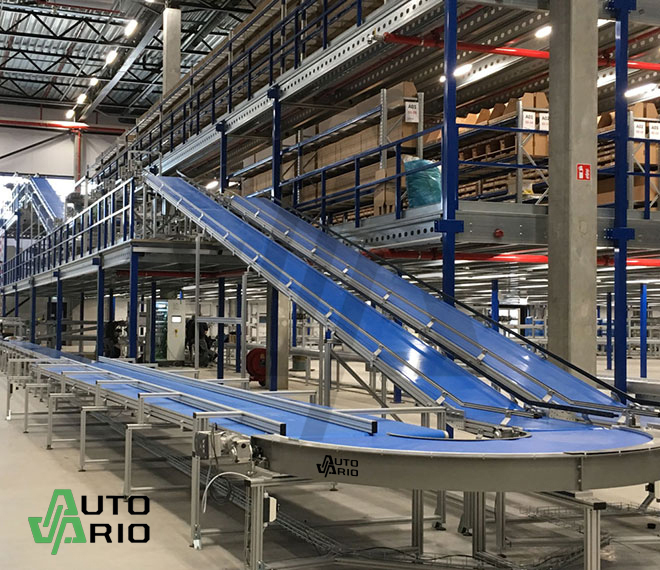
An efficient conveyor layout is essential for optimizing production flow, reducing operational costs, and improving overall manufacturing productivity. A well-designed conveyor system ensures that materials and products move smoothly between different stages of the production process while minimizing bottlenecks and unnecessary handling.
Designing the right conveyor layout requires careful planning and consideration of several factors such as production requirements, facility space, product characteristics, and automation levels.
In this article, we explore the key steps involved in designing an efficient conveyor layout for your factory.
Understand Your Production Process
The first step in designing a conveyor layout is to thoroughly understand your production workflow. This includes identifying how materials move through each stage of the process.
Important questions to consider include:
- What products or materials will be transported?
- What is the required production capacity?
- How many processing stages are involved?
- Where are the key input and output points?
Mapping the production process helps engineers design a conveyor system that supports a continuous and organized flow of materials.
Evaluate the Available Factory Space
Factory space plays a major role in conveyor system design. The layout should make the best use of available floor area while ensuring safe movement for workers and equipment.
In many facilities, space limitations can be solved by using:
- Curved conveyors to change direction efficiently
- Inclined conveyors to move products between levels
- Compact conveyor modules to reduce equipment footprint
A well-planned layout ensures that production lines remain efficient without overcrowding the workspace.
Choose the Right Conveyor Type
Different production processes require different types of conveyor systems. Selecting the right conveyor type ensures reliability and efficiency.
Common conveyor options include:
- Belt conveyors for smooth and continuous transport
- Roller conveyors for boxes, cartons, and pallets
- Modular conveyors for flexible layouts and food processing environments
- Screw conveyors for transporting bulk materials
Choosing the appropriate conveyor type based on the product and industry requirements is essential for long-term system performance.
Optimize Product Flow
A good conveyor layout should create a smooth and uninterrupted product flow from the start of production to the final stage.
To achieve this:
- Minimize unnecessary transfers between conveyors
- Avoid sharp direction changes that may disrupt product movement
- Ensure consistent conveyor speeds between sections
Optimizing product flow reduces delays and increases production efficiency.
Consider Automation and Integration
Modern manufacturing environments often rely on automated systems. Conveyor layouts should be designed to integrate with other equipment such as:
- Packaging machines
- Checkweighers
- Sorting systems
- Robotic handling equipment
Automation integration improves production consistency and reduces manual handling.
Focus on Safety and Accessibility
Safety should always be a priority when designing conveyor systems.
Important safety considerations include:
- Adequate spacing between equipment
- Emergency stop systems
- Safety guards and barriers
- Clear access points for maintenance
Ensuring easy access for maintenance teams also helps reduce downtime and improves system longevity.
Plan for Future Expansion
Factories often grow over time, and production capacity may increase. Designing a flexible conveyor layout allows for future upgrades without major modifications.
Consider designing systems that:
- Allow additional conveyor sections to be added
- Support increased production speed
- Integrate with new machinery
Planning for future expansion helps companies avoid costly redesigns later.
Comments are closed