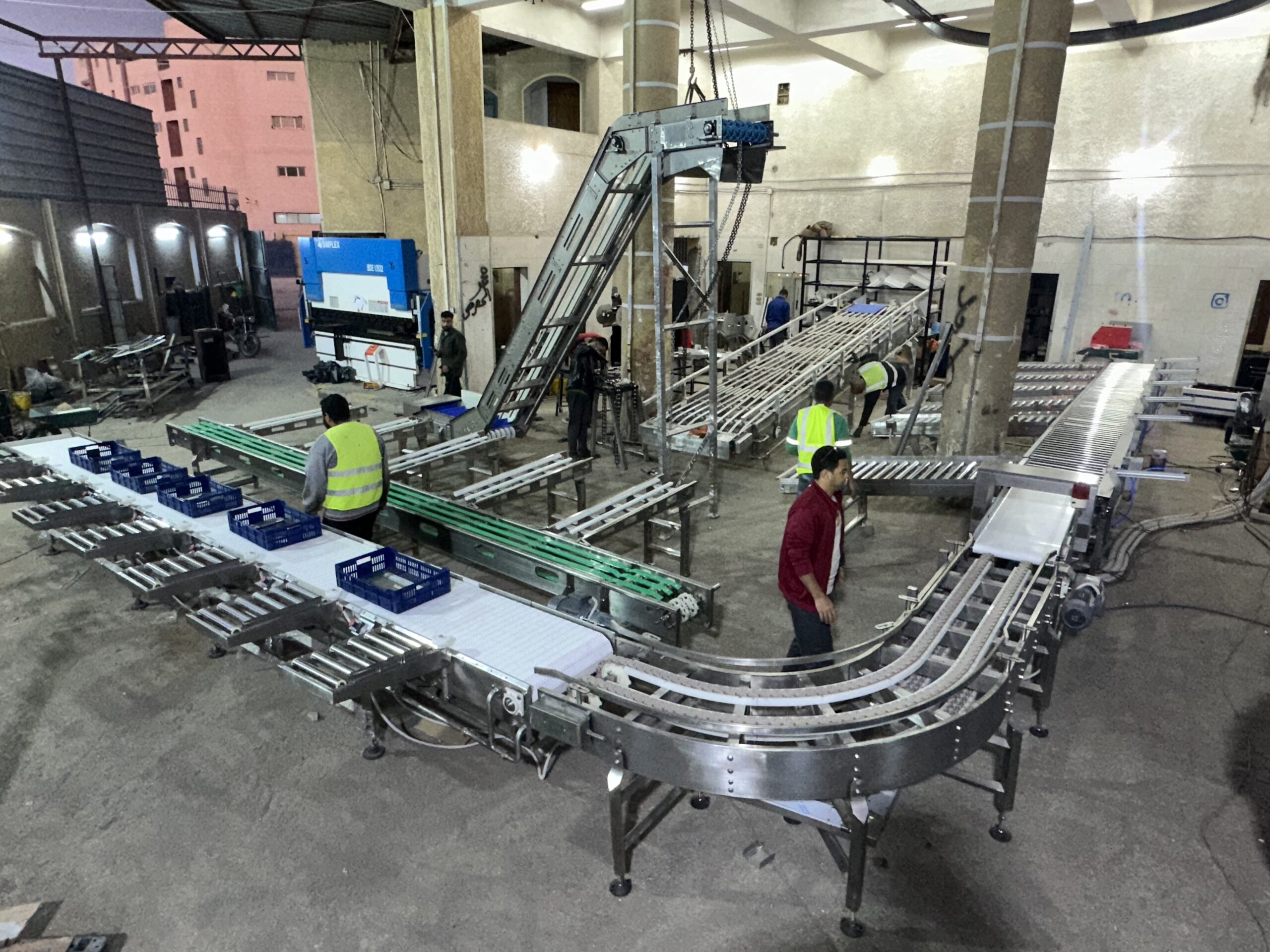
In modern manufacturing and industrial production, efficiency and productivity are essential for staying competitive. One of the most important technologies that helps factories streamline operations is the conveyor system.
Conveyor systems allow materials and products to move smoothly between different stages of production, reducing manual labor, improving speed, and ensuring consistent workflow.
In this article, we will explore what a conveyor system is, the main types of conveyor systems, and the key benefits they provide to industrial operations.
What Is a Conveyor System?
A conveyor system is a mechanical material handling system designed to transport products, raw materials, or components from one location to another within a facility.
These systems are commonly used in factories, warehouses, packaging facilities, and distribution centers. They can move items horizontally, vertically, or along complex paths depending on the design of the production line.
Conveyor systems typically consist of several key components, including:
- Conveyor belt or rollers
- Motors and drive systems
- Support structures and frames
- Control systems
- Sensors and safety devices
By automating the movement of products, conveyor systems significantly increase efficiency and reduce the need for manual handling.
Types of Conveyor Systems
There are many different types of conveyor systems used across industries. The choice of system depends on the product type, production speed, load weight, and factory layout.
1. Belt Conveyors
Belt conveyors are among the most widely used conveyor systems in manufacturing.
They consist of a continuous belt that moves over rollers or pulleys to transport products.
Common applications:
- Food processing industries
- Packaging lines
- Assembly lines
- Logistics and distribution centers
Advantages:
- Smooth and continuous product movement
- Suitable for a wide range of products
- Simple and reliable design
2. Roller Conveyors
Roller conveyors use a series of rotating rollers to move products.
They can be either gravity-driven or motor-driven, depending on the system design.
Common applications:
- Warehousing operations
- Packaging lines
- Pallet handling
Advantages:
- Ideal for heavy loads
- Durable and low maintenance
- Efficient for box and pallet transport
3. Modular Conveyors
Modular conveyors use interlocking plastic segments instead of a continuous belt.
These systems are highly flexible and commonly used in industries that require frequent cleaning and maintenance, such as food and beverage production.
Advantages:
- Easy maintenance and repair
- Resistant to moisture and chemicals
- Flexible design for curved layouts
4. Screw Conveyors
Screw conveyors use a rotating screw blade to move bulk materials inside a tube or trough.
Common applications:
- Grain processing
- Powder handling
- Cement and chemical industries
Advantages:
- Ideal for bulk materials
- Enclosed system reduces contamination
- Suitable for inclined transportation
5. Bucket Conveyors
Bucket conveyors are used for vertical transportation of bulk materials. They consist of buckets attached to a belt or chain.
Common applications:
- Feed mills
- Grain processing plants
- Agricultural industries
Industries That Use Conveyor Systems
Conveyor systems are widely used across many industries, including:
- Food and beverage manufacturing
- Packaging and logistics
- Automotive manufacturing
- Agricultural processing
- Pharmaceutical production
- Chemical processing
These industries rely on conveyors to ensure efficient production flow and reduce operational delays.
Benefits of Conveyor Systems
Increased Efficiency
Conveyor systems significantly improve the speed and consistency of material movement within factories.
Reduced Labor Costs
By automating product transportation, businesses can reduce the need for manual handling and lower labor costs.
Improved Workplace Safety
Conveyors reduce the risk of workplace injuries associated with manual lifting and product transportation.
Consistent Production Flow
Automated transport systems ensure a steady and reliable flow of products across the production line.
Scalability and Flexibility
Modern conveyor systems can be customized and expanded to meet changing production needs.
Choosing the Right Conveyor System
Selecting the right conveyor system requires evaluating several factors, such as:
- Product size and weight
- Production speed
- Factory layout
- Environmental conditions
- Level of automation required
A well-designed conveyor system ensures optimal efficiency and smooth operation across the entire production process.
Comments are closed