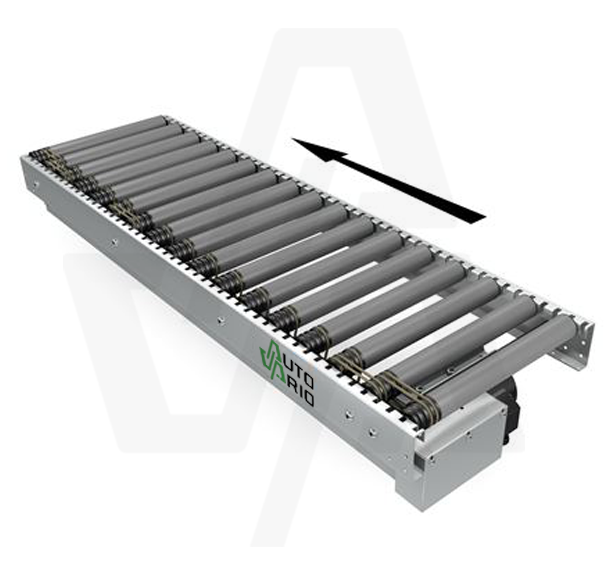
In modern manufacturing and material handling operations, conveyor systems play a crucial role in ensuring smooth and efficient product movement. One of the most important decisions when designing a production line is choosing between Non-Driven Conveyors and Driven Conveyors.
Each system has its own advantages and is suited for different industrial applications. Selecting the right type can improve productivity, reduce operational costs, and optimize workflow within a facility.
In this article, we explore the key differences between Non-Driven and Driven conveyor systems and how to determine which one is best for your operation.
What Are Non-Driven Conveyors?
Non-Driven Conveyors, also known as gravity conveyors, operate without an external power source such as a motor. Instead, they rely on gravity or manual force to move products along the conveyor path.
These systems typically consist of rollers or wheels mounted on a frame that allow items to move easily across the surface.
Advantages of Non-Driven Conveyors
- Low installation cost compared to powered systems
- No electricity consumption, which reduces operating expenses
- Simple design and minimal maintenance
- Easy to install and expand when needed
Limitations of Non-Driven Conveyors
- Limited control over product speed
- Not suitable for long-distance transportation
- Less effective for heavy loads or high production speeds
- Requires manual intervention in some cases
Common Applications
Non-driven conveyors are commonly used in:
- Packaging stations
- Assembly lines
- Warehouse sorting areas
- Temporary buffer zones between production stages
What Are Driven Conveyors?
Driven Conveyors are powered conveyor systems that use electric motors and drive mechanisms to move products along the production line. These systems allow precise control over speed and direction, making them ideal for automated environments.
Driven conveyors can include different configurations such as belt conveyors, motorized roller conveyors, and chain conveyors.
Advantages of Driven Conveyors
- Consistent and controlled product movement
- Suitable for long distances and heavy loads
- Easily integrated into automated production systems
- Improves overall productivity and efficiency
Limitations of Driven Conveyors
- Higher initial investment cost
- Requires electrical power
- Needs regular maintenance of motors and mechanical components
Common Applications
Driven conveyors are widely used in:
- Food and beverage production lines
- Automated packaging systems
- Manufacturing assembly lines
- Logistics and distribution centers
Key Differences Between Non-Driven and Driven Conveyors
| Feature | Non-Driven Conveyors | Driven Conveyors |
|---|---|---|
| Power Source | Gravity or manual force | Electric motor |
| Installation Cost | Lower | Higher |
| Speed Control | Limited | Precise control |
| Load Capacity | Light to medium loads | Medium to heavy loads |
| Automation | Limited | Highly compatible with automation |
| Maintenance | Minimal | Requires periodic maintenance |
Factors to Consider When Choosing a Conveyor System
Choosing the right conveyor system depends on several important factors:
Product Type and Weight
Heavier products typically require driven conveyors for reliable movement.
Distance Between Workstations
Long production lines benefit from motorized conveyors that maintain consistent speed.
Production Speed Requirements
High-speed production environments usually rely on powered conveyors.
Level of Automation
Facilities with automated equipment need driven systems that synchronize with other machines.
Budget and Operating Costs
Non-driven systems can be a cost-effective solution for simple operations.
Comments are closed